
Sant Dionís, Valencian Valentine's Day. Still don't know what Valencian Valentine's Day is? Would you like to learn more about this special day? So, come and discover everything you need to know to celebrate Sant Dionís like a true Valencian. That the 14th
Still don't know what Valencian Valentine's Day is? Would you like to learn more about this special day?
So, come find out everything you need to know to celebrate Sant Dionis like a true Valencian.
that he February 14 is Valentine's Day, that is, Valentine's Day, everyone knows it, but the October 9 is Valencian Valentine's DayOnly a few lucky people know it.
Surely you are wondering where this tradition of Sant Dionís day comes from and the truth is that a very curious story is hidden behind it.
As is known, Valencians love gunpowder, so much so that it is practically impossible to conceive of a party or celebration in Valencia in which firecrackers are not thrown, incredible mascletás or beautiful night castles are exploded.
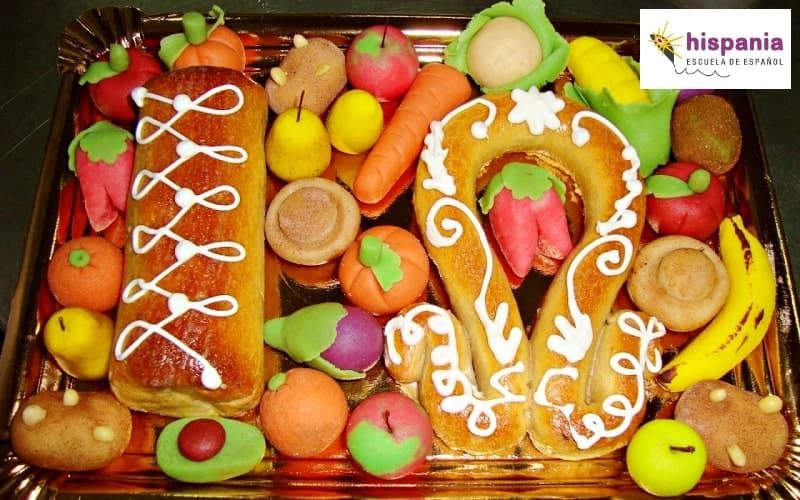
The problem appears in the 18th century, when the Nueva Planta Decrees prohibited celebrating the entry of Jaume I into Valencia and the Valencian confectioners decided to protest by making marzipan sweets that represented the firecrackers and rockets that they could not throw.
These marzipan rockets were called piuleta, which is a small, thundering firecracker, which is a large and very loud firecracker.
In addition, they were accompanied by fruits and vegetables that symbolized the fertility of the Valencian garden and also made reference to the vegetables that the Moors gave to Doña Violante of Hungary, wife of Jaume I.
Later, the ban on celebrating October 9 was lifted but the tradition of marzipan sweets and mocators the day of Sant Dionís continued.
The festival of Sant Dionís is celebrated in honor of the patron saint. It is a day when lovers give each other mocaorà, a typical sweet of the city.
October 9 is Valencian Valentine's Day, a very special date on which lovers give each other sweets and walk around the city.
Mocadorà is a marzipan sweet that is given as a gift during the Sant Dionís festival. Tradition says that mocaorà originated in the 18th century, when almonds began to be given to lovers during Sant Dionís Day.
This date coincides with the day of Sant Dionís, patron saint of Valencian lovers, and it is a tradition to eat marzipan sweets and men usually give silk scarves called “mocadors” to women.
This sweet is oval in shape and has a silk ribbon in the center. Lovers place it on their partner's wrist as a bracelet.
These scarves can be woven with different types of materials, such as cotton, linen or silk.
Many Valencian women keep all the scarves that their partner has given them during the relationship as a token of love. Isn't it romantic? Often, the marzipan sweets are directly wrapped in the handkerchiefs and this was called “la Mocadorà”.
During the Sant Dionís festival, in addition to the mocaorà, sweets in the shape of fruits and vegetables are given. These sweets are typical of the city of Valencia and are made with marzipan, ground almonds and sugar.
The festival of Sant Dionís is closely related to the pastry chefs of Valencia, since they are in charge of making the delicious mocadoràs that are given as gifts during this festival.
Every year pastry chefs prepare hundreds of sweets for all those who want to celebrate this special day. In fact, it is estimated that around 70,000 kilos of marzipan can be used to make these beautiful and delicious figures.
In addition, the Guild of Bakers and Pastry Chefs of Valencia holds the Sant Dionís contest every year, in which it chooses the best mocadorà and the best showcase in the entire city.
Therefore, when these dates approach, you will begin to see how the windows of all the pastry shops are decorated with great detail and enthusiasm.
If you are in Valencia this Sant Dionís, you already know what you have to do to celebrate it like a true Valencian.
And if you are wanting to improve your Spanish or your culture by discovering more details and traditions like this, do not hesitate to come to the wonderful spanish classes and cultural activities of Hispania, Spanish school, where our incredible team of professionals will enrich your stay in Valencia.
Article written by Rita Rodríguez Varela for Hispania, Spanish school.